
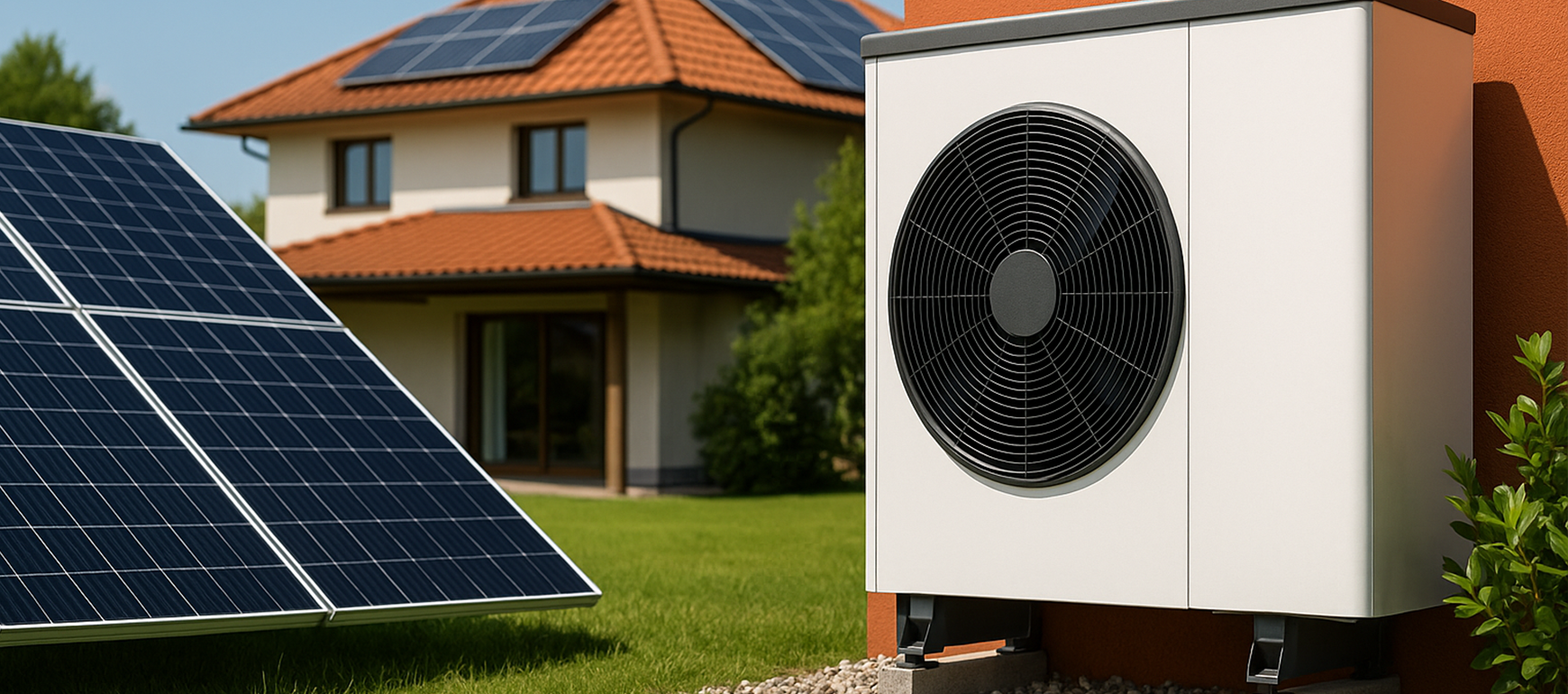
Photovoltaic Panels and Thermal Power Plants: Two Modern Solutions for Energy-Efficient Homes
In today’s context marked by rising energy costs and the shift toward sustainable solutions, more and more homeowners choose to make their homes more efficient by installing photovoltaic panels and modern heating systems.
Although these are two distinct technologies, they can be intelligently combined to reduce energy consumption, increase comfort, and achieve energy independence.
Photovoltaic Panels – Your Solar Energy Source
What are they?
Photovoltaic panels are systems that capture solar energy and convert it into electricity. Through special silicon cells, sunlight is transformed into direct current (DC), which is then converted into alternating current (AC) by an inverter – so it can be used in your home.
Types of panels:
- Monocrystalline – higher efficiency, higher price
- Polycrystalline – more affordable, slightly lower yield
- Thin-film – flexible, but with reduced efficiency
Advantages:
- Significantly lower electricity bills
- Green, clean, and renewable energy
- Energy independence from traditional suppliers
- Possibility to inject surplus into the grid (prosumer)
- Increased property value
Limitations:
- Performance depends on sunlight (day/night, seasons)
- Requires upfront investment
- Optimal output only if correctly oriented and dimensioned
2. Thermal Power Plants – The Solution for Heating and Hot Water
What are they?
Thermal plants are devices that produce heat and domestic hot water for your home. They can run on various energy sources: gas, wood, pellets, or electricity. They play a key role in daily thermal comfort.
Main types:
- Gas-powered – most popular in areas with gas network access
- Wood/pellet – mainly used in rural areas
- Electric – compact, clean, ideal when combined with solar panels
- Heat pumps – extract heat from air, ground, or water with high efficiency
Advantages:
- Constant thermal comfort
- Instant hot water available at all times
- Automation and remote control via thermostats or apps
- Easy integration with modern home systems
Limitations:
- Dependence on fuel (gas, wood, etc.)
- Higher consumption costs if not backed by renewable energy
- Requires regular maintenance
3. How They Work Together: Photovoltaic Panels + Thermal Power Plant
Why combine them?
Combining a solar panel system with a modern heating plant (especially electric or heat pump) allows you to use the energy generated by the panels to heat your home, significantly reducing your monthly utility bills.
Ideal scenario:
- Daytime: The photovoltaic system produces electricity which powers the electric boiler or heat pump for heating and hot water.
- Nighttime: If solar batteries are available, stored energy is used. Otherwise, the system draws power from the grid.
- Summer: Panels produce more than you consume. The surplus can be injected into the grid (as a prosumer) or used for appliances.
Integrated system benefits:
- Very low or even zero bills
- Eco-friendly, CO₂-free solution
- No need for gas or wood
- Smart system with remote control
- High efficiency, especially with heat pumps (COP 3–5)
What to consider:
- Annual energy consumption – a specialist should calculate your needs
- Roof surface – affects how many panels can be installed
- Storage system – batteries improve efficiency but add to costs
- Initial investment – higher upfront, but recoverable in 5–8 years
Conclusion: A Modern Home Needs Green Energy and Efficient Heating
Photovoltaic panels and modern heating systems are complementary technologies that, when properly planned, can transform a traditional house into a smart, economical, and eco-friendly home. By using solar energy to power an electric boiler or a heat pump, you get not only comfort and savings but also a real contribution to environmental protection.
Want to find out which system suits your home best?
Contact us for a free evaluation. We’ll help you choose the best solutions for a green future and lower energy bills!